 Dr. Heidi Queen MD | Energize Health & Hormones
Bone health becomes increasingly important as we move through midlife and menopause. Changes in estrogen and other factors can accelerate bone loss, sometimes quietly, long before there is a fracture or another obvious sign that something has changed. That is one reason Dr. Heidi Queen is excited to offer something unusual at Energize Health & Hormones: REMS bone scanning using Echolight’s EchoS technology.
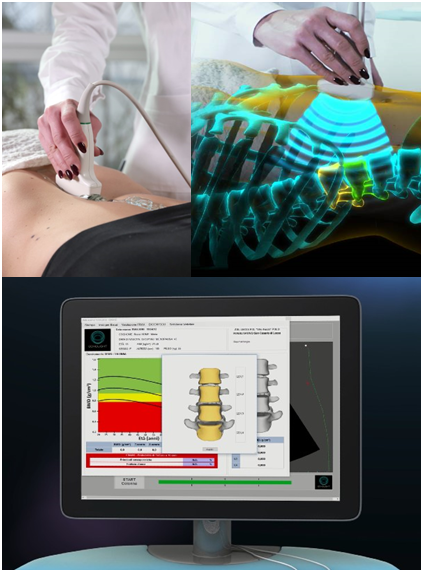
REMS stands for Radiofrequency Echographic Multi-Spectrometry. In simple terms, it is an ultrasound-based technology that uses radiofrequency signals to assess bone rather than the X-rays used by a traditional DEXA scan. The EchoS system is FDA-cleared in the United States and is designed to assess bone mineral density at the lumbar spine and femoral neck.
What happens during a REMS scan?
The process is quick and noninvasive. An ultrasound probe is placed over the lower back and hip to collect information from the bone. Unlike a DEXA scan, there is no ionizing radiation, and the scan can be performed in a regular medical office rather than a dedicated radiology setting. REMS produces measurements including bone mineral density and T- and Z-scores, allowing clinicians to evaluate bone density using familiar measures. The technology also generates a fragility assessment intended to provide additional information about fracture risk and bone quality.
For patients, one of the biggest advantages may simply be accessibility. Instead of scheduling a separate appointment at an imaging center, bone health can be assessed as part of a visit with your own physician.
Why does this matter during menopause?
Bone loss can accelerate during the menopausal transition, making this an important time to pay attention to skeletal health. The International Society for Clinical Densitometry recommends bone-density testing for women during the menopausal transition when clinical risk factors for fracture are present, as well as for postmenopausal women who meet other testing criteria.
At Energize, bone health is considered as part of the larger picture of women’s health—not simply as a number on a test report. Nutrition, hormones, physical activity, muscle mass, medications, metabolic health and individual fracture risk can all play a role in maintaining strong bones as we age.
REMS and DEXA aren’t exactly the same thing
It is important to understand that REMS and DEXA are different technologies, and their results should not simply be treated as interchangeable. DEXA remains the established standard for diagnosing osteoporosis and is the technology underlying current clinical diagnostic guidelines. REMS is a newer approach that offers some practical advantages, particularly its lack of ionizing radiation and its ability to be performed conveniently in a medical office.
Research continues to evaluate how REMS compares with DEXA in different patient populations and how best to use it for screening and monitoring. Recent studies have found encouraging areas of agreement while also identifying situations in which the two technologies do not produce interchangeable results. That makes the clinical context important. A REMS scan can provide useful information about bone health, but it should be interpreted by a physician who understands both the technology and the patient’s individual risk factors. When a more definitive diagnostic evaluation is needed, DEXA may still be appropriate.
Bone health you can assess in the office
Dr. Queen is among a relatively small number of physicians in the United States trained to use REMS technology, and Energize Health & Hormones is one of the practices offering this type of bone-health assessment directly in the office. For patients, that means an additional tool for understanding what is happening to their bones—without adding radiation exposure or another trip to an imaging center.
Your bones are part of your long-term health. The earlier you understand their condition, the more information you have to work with.
If you are concerned about bone loss, have risk factors for osteoporosis, are going through menopause, or simply want to understand your bone health more completely, talk with Dr. Queen about whether an in-office REMS assessment is appropriate for you. Energize Health & Hormones takes a personalized approach to health through menopause and beyond, helping patients look at the bigger picture—including the bones that support them for the years ahead.
STAY IN THE LOOP