Protein Is Part of the Picture — Not the Whole Picture
 Dr. Heidi Queen, MD | Energize Health & Hormones
If you spend any time on social media, listen to health podcasts, or follow wellness news, you’ve probably noticed that protein has become the nutrient of the moment. Protein is being promoted for weight loss, muscle, bone health, brain health, satiety and longevity — and sometimes the messaging makes it sound as though every meal should be an elaborate exercise in maximizing your protein intake.
Dr. Jen Gunter, whose evidence-based approach to women’s health I greatly respect, recently took a closer look at the protein conversation. Her conclusion is refreshingly sensible: yes, protein matters. But more isn’t automatically better, and protein is not the only nutrient your body needs.
How much protein do women actually need?
A reasonable evidence-based recommendation is approximately 1.2–1.6 grams of protein per kilogram of body weight per day. For someone weighing 80 kilograms (about 176 pounds), that works out to roughly 96–128 grams of protein per day. People who are highly active or competitive athletes may need somewhat more. For most people, however, the bigger challenge is simply getting enough protein consistently — rather than trying to consume enormous amounts.
It can be helpful to distribute protein across the day, with roughly 20–30 grams at each of three meals. Total daily intake appears to be more important than obsessing over precisely when you eat it. And for many people, breakfast is an easy place to improve. A breakfast that includes Greek yogurt, eggs, cottage cheese, or another protein-rich food can help you make progress toward your daily needs without turning every meal into a protein challenge.
Protein is important — but it isn’t magic
There are very good reasons to pay attention to protein as we age. Adequate protein can help protect against sarcopenia, the age-related loss of muscle mass. Combined with resistance training, it can support muscle growth and strength. Protein can also contribute to feelings of fullness and may be helpful as part of an overall approach to maintaining or losing body fat. And when you’re getting enough calcium, adequate protein can support the maintenance of bone mass — an especially important consideration for women as they move through midlife and beyond. But this is where the current protein frenzy can get a little silly.
We don’t eat protein in isolation. We need carbohydrates, fats, vitamins, minerals, fiber and a wide variety of other nutrients, too. Food is also supposed to be enjoyable. If every meal becomes an exercise in finding the next protein “hit,” we can lose sight of the bigger nutritional picture. There’s also a lot of misinformation floating around. Claims that women in menopause require dramatically more protein simply because they are menopausal, or that eating less than a certain amount of protein at a meal somehow causes it to be converted into sugar, are examples of how complicated nutritional science can get flattened into social-media sound bites. The goal shouldn’t be to win the protein Olympics.
What kind of protein matters?
If your goal is supporting muscle, not all proteins are nutritionally equivalent. When researchers talk about protein supporting muscle protein synthesis, they are generally talking about complete proteins — proteins that provide all of the essential amino acids your body needs. This is one reason foods such as dairy, eggs, fish, meat and certain plant combinations can be useful sources of dietary protein. Collagen is a little different.
Collagen is an incomplete protein and lacks tryptophan while being relatively low in leucine, an amino acid that plays an important role in muscle protein synthesis. That doesn’t necessarily make collagen “bad,” but it does mean that collagen shouldn’t automatically be treated as interchangeable with a complete protein when your primary goal is supporting muscle. This is also something to keep in mind when evaluating protein powders, bars, drinks and other products marketed specifically to women.
Don’t let the label do the thinking for you
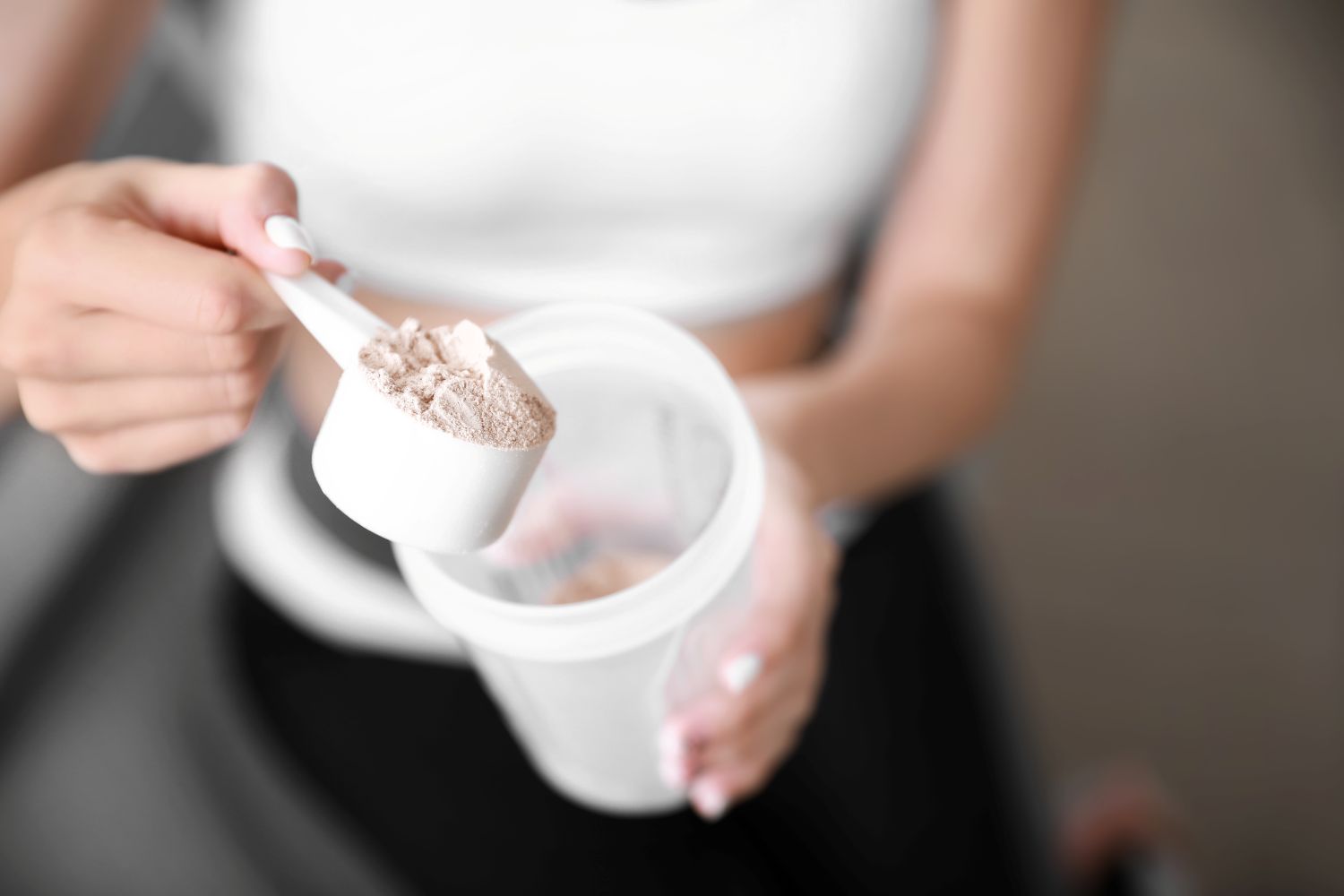
Protein supplements can certainly be convenient. There’s nothing inherently wrong with using one if it helps you meet your nutritional needs. But if you’re buying a product specifically because you want a certain amount of complete protein, it can be worth looking beyond the large number printed on the front of the package.
A product may contain, for example, 23 grams of total protein while getting some of that protein from collagen. In that situation, the total protein number doesn’t necessarily tell you how much complete protein you’re actually getting. This is one of the useful points Dr. Gunter raises in her discussion of protein labeling: consumers shouldn’t have to become nutrition-label detectives just to figure out what they’re purchasing. But until labeling becomes more straightforward, reading the nutrition facts and understanding the protein sources can help. And remember that a protein supplement is just that — a supplement to your diet. It doesn’t automatically make a product more nutritious than an ordinary food. Greek yogurt or Skyr, for example, can provide substantial amounts of complete protein along with other nutrients, including calcium, and may be a perfectly practical option.
The bigger picture matters more than the protein hype
Perhaps the most useful way to think about protein is this: meet your needs, but don’t make protein the entire point of your diet. If you’re getting adequate protein from a varied diet, doing resistance exercise to maintain muscle, eating plenty of plants and fiber, getting appropriate amounts of calcium and other nutrients, and enjoying your meals, you’re probably doing something much more valuable than chasing the latest protein trend.
This becomes particularly important in midlife. Women’s nutritional needs and body composition can change as we age, but there is no single “magic” food or nutrient that takes care of everything. Supporting healthy aging requires looking at the whole picture — muscle, bone, metabolic health, cardiovascular health, nutrition, movement, sleep and the individual factors that influence your health. Protein deserves a place in that picture. It just doesn’t need to take over the whole canvas.
A more thoughtful approach to nutrition
If you’re wondering how much protein you need, what foods make sense for your individual health goals, or how nutrition fits into your broader health strategy, this is exactly the kind of conversation worth having with a physician who looks at the whole person.
At Energize Health & Hormones, Dr. Queen takes an individualized approach to women’s health and wellness, helping patients make informed decisions based on their health history, goals and changing needs. If you’re ready to move beyond the latest wellness trend and create a health strategy that makes sense for you, call (415) 548-7901 to learn more about working with Dr. Queen.
STAY IN THE LOOP